Injectors


 Turbos


 Fuel Pumps

 Actuator

 EGR Coolers
 Contamination Kits

 Accessories Kits
OEM vs Aftermarket Diesel Parts Compared

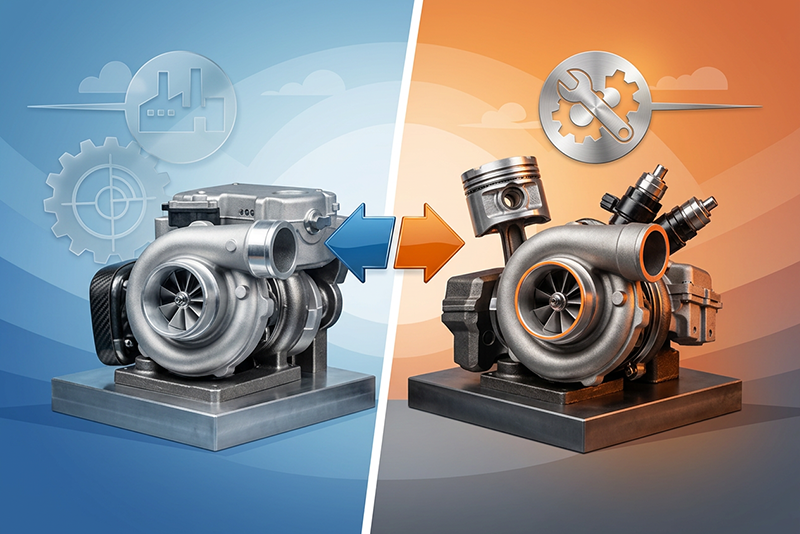
A failed injector, turbo, or high-pressure fuel pump does not care whether your truck is a personal work rig or part of a 40-unit fleet. It stops production either way. The real question in the OEM vs aftermarket diesel parts decision is not which label sounds better. It is which part is correct for the engine, built to the required standard, available when you need it, and supported if there is a problem.
For diesel owners and repair shops, the wrong choice can mean repeat labor, contamination damage, missed loads, and a truck back in the bay before the first payment clears. The right choice depends on the component, the truck’s duty cycle, the quality of the source, and how thoroughly the failure is diagnosed before the new part goes in.
What OEM Diesel Parts Actually Mean
OEM stands for original equipment manufacturer. In truck repair, that usually means a part sold under the engine, truck, or component manufacturer’s brand and intended to meet the original production specification. A genuine Cummins, Caterpillar, Detroit, Ford, or Volvo part is the familiar example.
OEM parts are often the straightforward answer when exact fitment, calibration, and manufacturer-backed consistency are the highest priorities. That matters on electronically controlled fuel systems, emissions components, sensors, and applications where a small specification change can create a major drivability issue. An OEM injector may arrive with the expected coding information, while an OEM actuator may reduce uncertainty around electronic compatibility.
Still, OEM does not automatically mean it is the only acceptable repair path. Many original components are produced by outside manufacturers. The truck or engine brand may package and distribute the part, but the underlying design and production can involve a supplier familiar to the aftermarket. OEM also does not solve a root-cause problem. Installing a new OEM CP4 pump into a fuel system contaminated with metal debris will not prevent another failure unless the contamination is addressed throughout the system.
The main drawbacks are cost and availability. Genuine parts can carry a higher price, and certain applications may be difficult to source quickly. For a fleet facing a parked truck and a tight schedule, waiting several days for a branded part can cost more than the price difference.
What Counts as an Aftermarket Diesel Part?
Aftermarket is a broad category, which is why it gets a bad reputation from people who treat every non-OEM part as the same thing. It is not. The category includes premium replacement parts from established manufacturers, direct-fit components built to OE-style specifications, economy parts, performance parts, and professionally remanufactured assemblies.
That range is the key issue. A premium replacement turbocharger or remanufactured injector that has been properly tested can be a dependable, cost-effective repair. A low-cost, unverified component with unclear sourcing can create fitment problems, poor performance, or early failure. The box label alone does not tell the full story.
A quality supplier should be able to confirm the exact application, explain whether a part is new or remanufactured, and provide warranty terms that match the product. For fuel-system components, ask about testing, calibration, trim code programming when applicable, and the condition requirements for the core return. Those details separate a repair-ready component from a gamble.
OEM vs Aftermarket Diesel Parts: Where Each Makes Sense
The best choice changes with the part you are replacing. Fuel delivery components deserve more scrutiny than many basic hard parts because they operate under extreme pressure and can damage other expensive components when they fail. An injector, common-rail pump, or unit pump must match the engine’s fuel-system requirements precisely.
For late-model electronically controlled injectors, a properly remanufactured injector can be an excellent option when it has been rebuilt with quality internal components, tested on advanced equipment, and programmed with the correct trim code. Without the correct calibration and installation procedure, even a good injector can cause rough running, balance-rate issues, smoke, or fault codes.
Turbochargers are another area where quality matters more than the broad OEM-versus-aftermarket label. A premium replacement or professionally remanufactured turbo can make sense for a working truck, but it must be matched to the exact engine arrangement and installed with attention to the oil feed, drain, intake tract, and charge-air system. If the previous turbo failed from oil starvation, restricted drainage, compressor wheel damage, or foreign material, those conditions must be corrected first.
For items such as air compressors, EGR coolers, and installation kits, a premium replacement option may provide strong value when the manufacturer has a documented fitment record and the supplier stands behind the part. Installation accessories are especially easy to overlook. Reusing compromised oil lines, seals, gaskets, or contaminated fuel-system hardware can turn a sound component replacement into a comeback.
OEM is often worth the added cost when a truck is under manufacturer warranty, when the repair requires a specific factory update, when the component has a known sensitivity to calibration, or when a fleet’s policy requires genuine parts. Aftermarket or remanufactured parts are often the better business choice when they meet the required standard, carry real warranty coverage, and reduce repair cost without sacrificing uptime.
Remanufactured Parts Are Not Just Used Parts
A remanufactured diesel component should never be confused with a take-off part pulled from another engine. A used part has an unknown operating history and remaining service life. A legitimate remanufactured part is disassembled, inspected, cleaned, rebuilt with replacement wear components as needed, and tested before sale.
The quality of that process varies widely. On injectors, look for testing that verifies delivery, return flow, response, and other performance characteristics required for the application. On turbos, the rotating assembly, housings, actuator operation, and balance process all matter. On fuel pumps, internal wear, contamination damage, and output performance cannot be judged from exterior appearance.
Core returns help make remanufacturing practical. Your old injector, pump, turbo, or other rebuildable component has value because it can be inspected and returned to service if it meets rebuilding criteria. That is why core charges and return conditions exist. Return the correct core promptly, drain fluids where required, protect it during shipping, and avoid sending back a mismatched or severely damaged unit without confirming the policy.
American Diesel Parts supports this repair path with remanufactured components, core-return logistics, testing, and application-specific support. For shops and owners, that can provide a practical middle ground between a low-cost unknown and the full cost of a new genuine assembly.
Do Not Let Price Be the Only Measurement
The cheapest part is rarely the cheapest repair if it causes a second installation. Labor, lost operating time, towing, diagnostic time, and collateral damage can quickly outweigh the savings on the invoice. This is particularly true for commercial trucks where one day down can affect dispatch, customers, and driver schedules.
At the same time, paying the highest price is not always the smartest move. A well-built premium replacement part backed by a 12-month limited warranty may be a better fit for an older work truck than an expensive OEM component. The decision should reflect the expected service life of the truck, how hard it works, the cost of downtime, and the repair budget.
Before ordering, confirm the engine serial number, VIN when appropriate, part number, emissions configuration, and any calibration or trim-code requirements. Diesel applications can change within the same model year. A 6.7L Cummins, Power Stroke, Duramax, Detroit DD platform, or International engine may have multiple fuel-system or turbo configurations that look similar but are not interchangeable.
Protect the New Part During Installation
Parts quality is only half of a successful repair. Cleanliness, diagnosis, and installation discipline determine whether the replacement component gets a fair chance to work.
When replacing a failed fuel pump or injector, inspect the fuel for water, debris, or metal. Replace filters as required, clean or replace contaminated lines and rails, and follow the correct priming procedure. When installing a turbo, verify oil supply and drain conditions, inspect the intercooler and piping for debris or oil buildup, and identify why the original unit failed. When working with electronic components, verify connectors, wiring integrity, battery voltage, fault codes, and required relearn or programming procedures.
A warranty is valuable protection, but it cannot compensate for a contamination event, blocked oil line, air leak, incorrect installation, or an unresolved electrical fault. Good diagnosis saves more money than choosing between two parts based on price alone.
The part that keeps your truck working is the right part – OEM, premium aftermarket, or professionally remanufactured – as long as it is correctly matched, properly installed, and backed by people who understand diesel repair.