Injectors


 Turbos


 Fuel Pumps

 Actuator

 EGR Coolers
 Contamination Kits

 Accessories Kits
Lift Pumps Versus Injection Pumps Explained

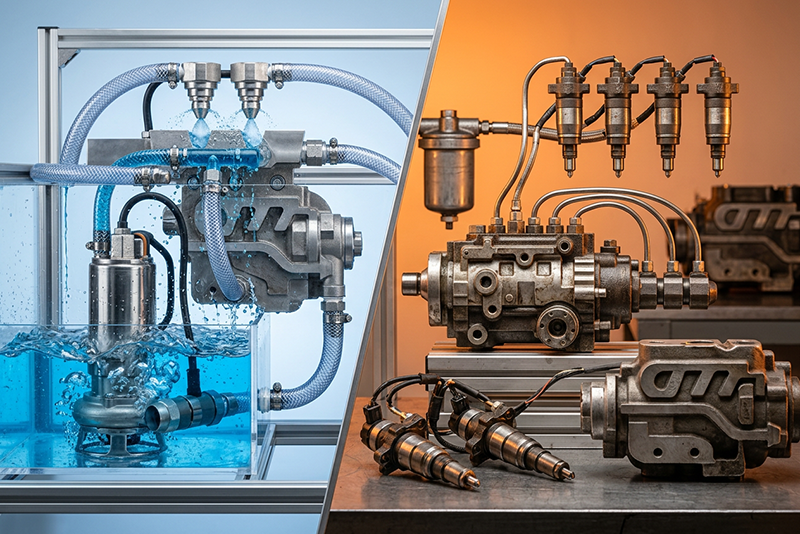
A hard-starting diesel, low power under load, or a no-start condition can all lead technicians to the fuel system. But diagnosing lift pumps versus injection pumps correctly matters. These pumps do not perform the same job, fail in the same way, or carry the same replacement cost. Replacing the wrong component wastes labor and can leave the original problem untouched.
The lift pump delivers a clean, steady fuel supply from the tank to the high-pressure side of the system. The injection pump, or high-pressure fuel pump (Nota: Enlaza a la categoría de High-Pressure Fuel Pumps) on many newer engines, creates the pressure required to inject fuel into the cylinders. One feeds the system. The other makes combustion possible.
Lift Pumps Versus Injection Pumps: The Core Difference
A lift pump is a low-pressure supply pump. Depending on the engine platform, it may be mounted in or near the fuel tank, along the frame rail, on the engine, or integrated into a fuel conditioning module. Its job is to pull or push fuel through the pickup tube, water separator, filters, lines, and into the injection system.
An injection pump is the metering and pressurizing component in a mechanical diesel fuel system. On common-rail diesel engines, the comparable component is commonly called a high-pressure fuel pump. It receives properly supplied fuel and raises its pressure dramatically before fuel reaches the injectors or common rail.
The pressure difference is substantial. A lift pump may operate at a relatively low supply pressure, often measured in single digits or tens of psi depending on the application. A high-pressure fuel pump operates at pressures that can reach tens of thousands of psi on modern common-rail systems. That difference explains why a restriction, air leak, or weak lift pump can damage more expensive components farther downstream.
What the lift pump does
The lift pump keeps the high-pressure side supplied with adequate fuel volume and pressure. It also helps maintain fuel flow through filters, which is critical because diesel fuel lubricates and cools components in many systems.
A healthy supply side prevents fuel starvation. When supply pressure drops, the injection pump or high-pressure pump may have to pull fuel against excessive restriction. That can cause low rail pressure, hard starting, hesitation, surging, reduced power, fault codes, and premature pump wear.
On engines such as Cummins applications with an externally serviceable lift pump, supply pressure testing is often one of the first diagnostic steps. A weak pump can still move some fuel at idle but fail when the truck is pulling a trailer, climbing a grade, or working under sustained load.
What the injection pump does
Mechanical injection pumps precisely meter fuel quantity and send it to each injector at the proper point in the engine cycle. The design varies by engine. Rotary pumps, inline pumps, and distributor-style pumps all have different internal layouts, but they share the same essential role: high-pressure fuel delivery timed to engine operation.
Modern electronically controlled common-rail systems separate some of those duties. The high-pressure pump builds rail pressure, while electronically controlled injectors meter and time the fuel event. The practical diagnosis remains similar: if the high-pressure side cannot build or hold commanded pressure, the engine may crank without starting or run poorly.
Why a Bad Lift Pump Can Damage the Injection System
The lift pump is often treated as a simple accessory pump. That is a costly mistake. A failing supply pump can turn a manageable repair into an injection pump, injector, rail, and fuel-system cleanup job.
High-pressure fuel components require clean fuel and consistent inlet supply. When a lift pump cannot provide enough volume, the high-pressure pump may run hot, lose lubrication, or cavitate. Cavitation occurs when fuel supply is inadequate and vapor pockets form or collapse inside the pump. Internal wear can follow quickly, especially under heavy demand.
On certain common-rail platforms, a high-pressure pump failure can release metal debris into the fuel system. Once contamination reaches the rail, injectors, lines, tank, and filters, replacing only the pump is not a dependable repair. The system must be inspected and cleaned correctly, and contaminated components may need replacement. That is why maintaining the low-pressure side is cheaper than repairing a contaminated high-pressure system.
Fuel filters deserve equal attention. A restricted filter can create symptoms that look like a weak lift pump. Before condemning either pump, verify filter condition, inspect the fuel for water or debris, and check for collapsed hoses, plugged tank pickups, loose fittings, and air intrusion.
Common Symptoms and What They Usually Point To
Symptoms overlap, so a code reader alone is not enough. Fuel pressure testing, scan-tool data, visual inspection, and application-specific specifications should guide the repair.
A failing lift pump commonly causes long crank times, intermittent power loss, stalling under load, low supply pressure, fuel aeration, or a noticeable change in pump noise. Some electric pumps become louder as they struggle against restriction or wear internally. Others fail quietly and simply cannot maintain volume.
Injection pump or high-pressure pump problems more often show up as a crank-no-start condition, low rail-pressure faults, severe loss of power, rough running, hard starting when hot, or metal contamination in the fuel system. Mechanical injection pump failures may also create timing-related performance issues, uneven idle, smoke, or cylinder misfire symptoms.
Do not assume every no-start means the injection pump has failed. A dead lift pump, empty fuel tank, restricted filter, air leak, failed fuel control actuator, wiring fault, or pressure sensor issue can produce similar complaints. Start with the basics and measure actual fuel supply before replacing expensive parts.
How to Diagnose the Right Pump
A disciplined diagnosis protects your customer, your shop, and the truck’s uptime. Begin at the tank and work forward. Verify that the tank contains clean fuel, the pickup is not restricted, and the filter and water separator are serviceable. Inspect fuel lines for wet fittings, cracked hoses, chafing, and loose quick-connects that can pull air without leaking fuel externally.
Next, check low-side pressure and volume against the engine manufacturer’s specification. Pressure alone is not the whole story. A pump may show acceptable pressure with little flow until demand increases. Test under conditions that reflect the complaint when possible, especially if the issue appears only under load.
If the low-pressure side checks out, move to high-pressure data. On electronically controlled engines, compare commanded rail pressure with actual rail pressure during cranking and operation. A significant gap can point toward a high-pressure pump issue, fuel control problem, excessive injector return flow, a rail pressure relief issue, or sensor and wiring faults.
For mechanical systems, confirm supply pressure, timing, shutoff solenoid operation, throttle linkage or electronic control operation, and injector line delivery before condemning the injection pump. The right test sequence depends on the engine family, so use the service information for that specific application.
Replacement Decisions: Quality, Compatibility, and Cleanliness
When a lift pump fails, install a pump that matches the engine’s pressure and volume requirements. An incorrect aftermarket pump can create low supply pressure, excessive pressure, drivability problems, or repeat failures. Replace restricted filters and address the condition that contributed to the failure, whether that is contaminated fuel, a damaged tank pickup, or neglected filter service.
When replacing an injection pump or common-rail high-pressure pump, cleanliness is non-negotiable. Dirt introduced during installation can damage precision components immediately. Clean surrounding areas before opening the fuel system, cap open lines, use clean fuel, and follow the required priming and relearn procedures for the application.
Remanufactured fuel-system components can be a practical solution when they are rebuilt and tested to the correct standard. On electronically controlled injection systems, programming and calibration details matter. A part that physically fits is not automatically the right part for the engine. Match part numbers, engine serial information, calibration requirements, and trim-code procedures before installation.
For fleets and working trucks, the cheapest pump is rarely the lowest-cost repair. The better choice is the component that meets the application, arrives ready for installation, and is backed by meaningful testing and warranty support. American Diesel Parts helps technicians and truck owners source dependable remanufactured, rebuilt, OEM, and premium replacement fuel-system components for major diesel platforms.
Keep the Supply Side From Becoming a Major Repair
Fuel-system reliability starts before the injection pump. Change filters on schedule, drain water separators, buy fuel from reliable sources, and investigate power-loss complaints before they become a no-start. If a truck has repeated lift pump failures, look beyond the pump itself for restriction, electrical issues, contaminated fuel, or an incorrect installation.
The lift pump may be the lower-pressure component, but it protects the entire fuel system. Test it early, repair the root cause, and give the injection system the clean, steady fuel supply it needs to keep the truck working.