Injectors


 Turbos


 Fuel Pumps

 Actuator

 EGR Coolers
 Contamination Kits

 Accessories Kits
Ford Diesel Injector Programming Explained

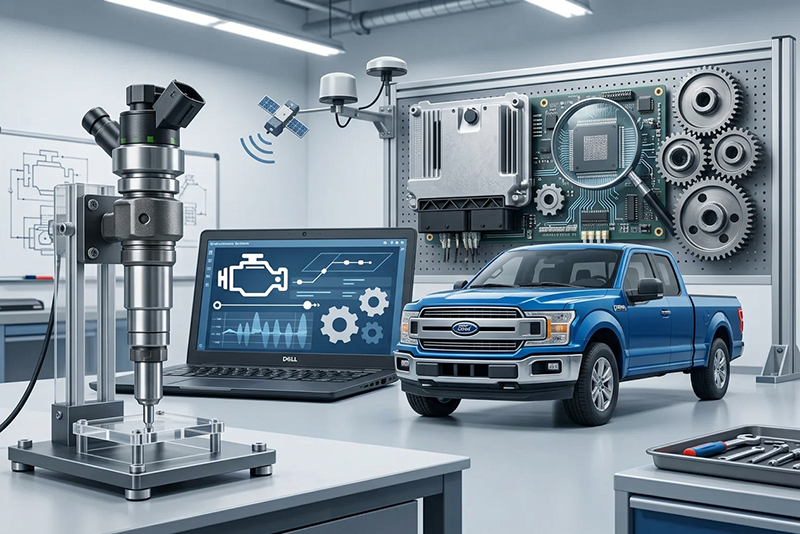
A replacement injector can be mechanically correct, properly installed, and still cause problems if its calibration data never reaches the truck. Ford diesel injector programming is the step that tells the PCM how a specific injector performs, so the control system can command fuel accurately cylinder by cylinder. Skip it when your application requires it, and a fresh injector job can turn into rough idle, smoke, imbalance codes, poor fuel economy, or a customer complaint that comes right back into the shop.
For Power Stroke owners, fleets, and repair shops, injector programming is not an optional finishing touch. It is part of completing the repair correctly. The exact procedure depends on the engine, model year, PCM strategy, and injector design, but the goal stays the same: match the replacement injector’s calibration information to the engine control system.
What Ford Diesel Injector Programming Actually Does
No two injectors flow exactly alike, even when they are built to the same specification. Manufacturers measure those small differences during production or remanufacturing and assign injector-specific data, often referred to as a trim code, correction code, or calibration code. That information allows the PCM to make precise adjustments to injector timing and fuel delivery.
On Ford diesel applications that require coding, the injector code is entered with a capable scan tool after installation. The PCM uses that data to account for the individual injector’s measured performance. The purpose is not to add horsepower or change the truck’s tune. It is to restore controlled, balanced fuel delivery as Ford intended.
This distinction matters. Injector programming cannot compensate for a weak high-pressure fuel pump, aerated fuel, contaminated fuel rails, poor compression, a damaged wiring harness, or a failed FICM on applicable engines. It also does not replace a proper injector contribution test, fuel pressure diagnosis, or inspection of the old injector for evidence of contamination. Programming supports a sound repair. It does not hide a bad diagnosis.
Trim Codes Are Not the Same as PCM Tuning
A performance calibration changes the engine’s operating strategy. Injector trim programming supplies the PCM with identification data for the injectors installed in the engine. One modifies broader fueling and operating parameters; the other helps the factory control strategy command a particular injector correctly.
That is why a truck with an aftermarket tune may still need injector coding after an injector replacement. The code entry is tied to the injector and the PCM’s ability to control it accurately. Treat it as a required service operation when the service information calls for it, regardless of whether the truck is stock or modified.
When Injector Coding Is Required
Ford diesel injector programming requirements vary across Power Stroke generations. Do not assume every Ford diesel uses the same process, and do not assume a code printed on an injector means it must be entered on every application. The engine family, PCM calibration, and replacement part instructions determine the correct procedure.
Later common-rail Power Stroke systems are especially dependent on accurate electronic control and injector-specific calibration information. On applications that use correction codes, installing an injector without entering its data can leave the PCM working from incorrect assumptions. The truck may start and run, but that does not prove the repair is complete.
When replacing a single injector, the cylinder location matters just as much as the code itself. A code entered for the wrong cylinder can create drivability concerns that look like a faulty replacement part. When replacing a full set, keep every injector organized from the moment the boxes are opened. Record each cylinder position and its corresponding code before the injectors go into the engine.
Older Power Stroke engines and different fuel-system designs may have different service requirements. Some procedures involve a calibration routine, a relearn, or no injector coding at all. The right answer comes from the engine-specific service procedure, not from a generic internet checklist.
The Right Way to Complete the Job
A clean installation and accurate programming process start before the scan tool is connected. Verify the correct injector part number for the exact engine and VIN application. Confirm whether the injector is new, remanufactured, OEM, or premium replacement, and review the supplier’s included instructions for coding and installation requirements.
Before installation, inspect the fuel system closely. If an injector failed due to metal debris, water contamination, or poor fuel quality, replacing only the injector may not be enough. Contaminated fuel systems often require a broader repair that addresses the pump, rails, lines, filters, tank, and related components. Installing quality injectors into a contaminated system is an expensive way to repeat the same failure.
Use proper torque procedures, new seals where required, and clean fuel-system handling practices. Even a small amount of debris can damage precision injector components. Once the mechanical work is complete, use a scan tool with the correct Ford diesel functions and current software coverage. A basic code reader is not enough for injector code entry.
Enter each injector’s calibration information exactly as shown. Watch for characters that can be misread, such as zero and the letter O. Confirm the cylinder order, save the programming event, and follow the scan tool prompts completely. Some vehicles may require an ignition cycle, clearing of related diagnostic trouble codes, or a specific relearn procedure after the data is entered.
Then verify the repair under real operating conditions. Check for leaks, hard starts, abnormal idle quality, excessive smoke, cylinder contribution concerns, and returning fault codes. A road test with live data is often the difference between a completed repair and a callback waiting to happen.
Problems That Look Like Bad Injectors
When a Ford diesel runs poorly after injector replacement, programming should be checked, but it should not become the automatic scapegoat. A wrong trim code, swapped cylinder location, interrupted programming event, or unsupported scan tool can absolutely cause trouble. So can an injector connector that is not fully seated or wiring that was disturbed during valve cover or intake work.
Fuel supply problems are another major source of confusion. Restricted filters, low supply pressure, air intrusion, failing pumps, damaged fuel lines, and debris can affect injector performance across multiple cylinders. On high-pressure common-rail systems, poor rail pressure control may produce symptoms that resemble injector failure. Diagnose the system instead of replacing parts by guesswork.
Mechanical conditions also matter. Low compression, valve-train damage, combustion leakage, and intake or exhaust restrictions can produce imbalance symptoms that a scan tool may point toward a cylinder. The injector is one part of a larger system. A professional diagnosis protects the truck owner, the repair shop, and the warranty process.
Why Programmed Remanufactured Injectors Matter
A remanufactured injector is only as dependable as the process behind it. Proper remanufacturing includes disassembly, inspection, replacement of worn internal components, precision testing, and verification that the injector meets the required operating specifications. For applications requiring trim code programming, the injector’s calibration data must also be handled correctly.
That is where price alone can become a costly decision. A bargain injector with questionable testing, missing code information, or no technical support can create more downtime than it saves. For a work truck, fleet unit, tow rig, or service vehicle, the real cost is not just the injector. It is lost labor, missed deliveries, repeat diagnostics, and another teardown.
American Diesel Parts supplies tested diesel fuel-system components with the technical support working shops and truck owners need. When selecting replacement injectors, confirm the engine application, ask whether programming is required, and make sure the shop has the scan-tool capability to finish the job.
Set the Truck Up for a Clean Repair
Keep the injector packaging until programming and verification are complete. The label may contain the trim information needed for code entry, and it provides a record if there is a question later. Document the injector location, code, vehicle mileage, diagnostic findings, and completed programming procedure on the repair order.
That paperwork may seem minor when the truck is on the lift, but it pays off when the vehicle returns months later or when a fleet manager needs a clear service history. Install clean parts, use the correct procedures, program what the PCM requires, and verify the result before the truck goes back to work. That is how injector replacement becomes a dependable repair instead of an educated guess.