


 Injectors


 Turbos


 Fuel Pumps


 Actuator


 EGR Coolers

 Contamination Kits


 Accessories Kits

Five Diesel Fuel Aeration Signs to Catch Early

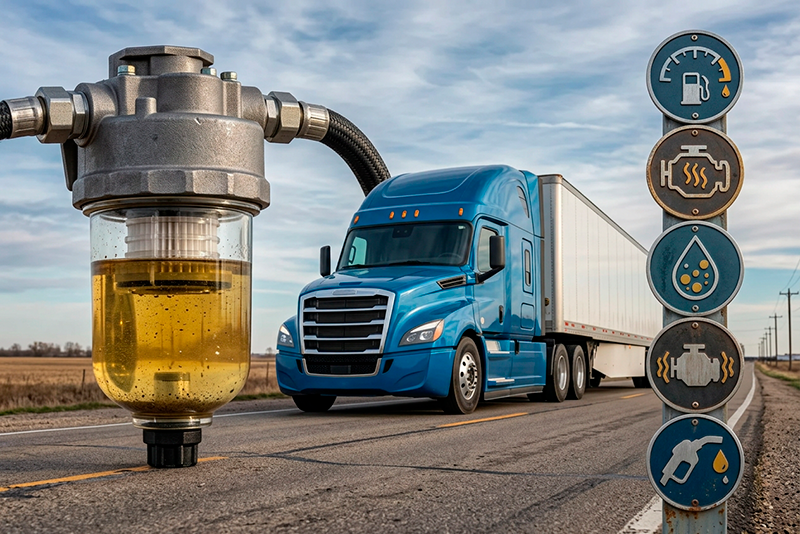
Air entering a diesel fuel system can create a problem that looks like several different failures at once. Knowing these five diesel fuel aeration signs helps you separate an air leak from a bad injector, weak lift pump, restricted fuel filter, or high-pressure fuel-system issue before the truck loses more time in the bay.
Fuel aeration means air is being pulled into the low-pressure side of the fuel supply system, usually between the tank pickup and lift pump. Unlike a visible fuel leak, an air leak may not leave a drop of diesel on the ground. A worn seal, loose fitting, cracked line, damaged filter housing, or improperly installed filter can pull air in while the engine is running.
That air compresses differently than fuel. The result can be unstable supply pressure, poor combustion, difficult starting, and accelerated wear in components that rely on a steady supply of clean diesel for cooling and lubrication. On common-rail systems especially, do not overlook a small supply-side leak just because the truck still runs.
Five Diesel Fuel Aeration Signs You Should Not Ignore
1. Long cranking, hard starts, or a no-start after sitting
A truck that starts normally after priming but cranks excessively after sitting is one of the clearest signs of air entering the fuel system. Fuel may be draining back toward the tank, or air may be collecting at a high point in the supply circuit. The engine has to purge that air before the pump can deliver stable fuel pressure.
This symptom is common after a fuel-filter service when the filter seal is pinched, the water separator drain is not fully closed, or the filter is not seated correctly. It can also point to a deteriorated quick-connect fitting, cracked supply hose, failed primer pump, or a leak at the fuel pickup assembly.
Do not keep cycling the starter until the batteries are weak. Verify that the system is properly primed, inspect the filter and seals, then look for a pressure loss or drain-back condition. On applications with an electric lift pump, listen for normal pump operation and confirm that it is actually moving fuel.
2. Rough idle or an intermittent stumble
Aerated fuel often shows up first at idle. The engine may lope, shake, surge, or briefly stumble as air bubbles move through the supply system. It may smooth out when rpm increases, then return at a stoplight or while idling at the jobsite.
A rough idle can also be caused by injector balance problems, low compression, poor electrical connections, EGR faults, or a cylinder-specific issue. That is why diagnosis matters. If the problem began directly after replacing a fuel filter, servicing tank lines, or running the truck very low on fuel, air in the system moves higher on the list.
Watch for a pattern. If the idle changes after the truck sits, worsens during cold starts, or improves after manual priming, inspect the supply side before condemning injectors. Replacing expensive parts without finding the leak only creates a repeat repair.
3. Power loss under load or fuel-pressure-related codes
A diesel can idle acceptably and still starve for fuel when it is pulling a trailer, climbing a grade, or working under PTO load. Under demand, the lift pump must maintain enough fuel volume and pressure to feed the high-pressure pump. Air entering the circuit reduces available fuel volume and can make rail pressure unstable.
The driver may describe the problem as falling flat, hesitating, bucking, or going into reduced-power mode. A scan tool may show actual fuel pressure dropping away from commanded pressure, depending on the engine platform and fault strategy.
Before deciding the high-pressure pump has failed, inspect the basics: fuel filter restriction, tank venting, pickup tube condition, supply-line damage, loose clamps, and the lift pump’s pressure and flow. A restricted filter and an air leak can produce similar complaints, and both can damage a good pump if left in service.
4. Foamy fuel or visible bubbles in a clear line
If the application has a clear fuel line, clear filter bowl, or a safe test setup for observing fuel flow, bubbles are direct evidence worth investigating. A few small bubbles immediately after service may clear as the system purges. Continuous foam, repeated large bubbles, or a line that never fully clears is not normal.
Avoid opening high-pressure fuel lines to look for air. Common-rail fuel pressure can cause severe injury. Aeration diagnosis belongs on the low-pressure supply side, using the correct test equipment and the engine manufacturer’s safety procedures.
Start near the last component that was serviced. Check the filter cap O-ring, water separator, drain valve, sensor seals, hose connections, and quick-connects. A clear test hose can be useful when installed correctly, but it is not a substitute for measuring supply pressure and checking for restrictions. Some leaks appear only under suction, so a connection can look dry and still be the source of the problem.
5. Unusual pump noise, repeat fuel-system failures, or metal risk
A lift pump that suddenly gets louder, changes pitch, or sounds like it is cavitating may be pulling fuel mixed with air. The noise alone does not prove aeration, but it should not be ignored when it comes with hard starts, hesitation, or pressure loss.
More serious cases can shorten the life of the high-pressure fuel pump. Diesel fuel provides lubrication and cooling inside fuel-system components. When supply is inconsistent, the pump may run hot or operate with poor lubrication. If a high-pressure pump begins to fail internally, metal contamination can spread through rails, injectors, lines, and the tank. At that stage, a complete contamination repair may be needed rather than a single pump replacement.
That is the real cost of overlooking aeration. A minor seal or supply-line repair can become a major fuel-system job if the truck stays in service until the pump is damaged.
Where Diesel Fuel Systems Commonly Pull Air
The low-pressure side is the place to focus. Common leak points include filter housing seals, water separator drains, hand primers, rubber supply hoses, hose clamps, quick-connect fittings, tank pickup tubes, sending-unit seals, and fuel-heater connections. On older trucks, hardened hoses and corroded line connections deserve a close inspection. On newer trucks, a disturbed seal after routine maintenance is often the culprit.
The location depends on the engine and chassis layout. A Cummins, Power Stroke, Duramax, Detroit, Paccar, Caterpillar, or International application may use different filter modules, lift-pump locations, and fuel-routing designs. Use the correct service information for the engine, not a guess based on another platform.
Low fuel level can expose a cracked pickup tube or a compromised standpipe that is hidden when the tank is full. If the symptom appears only below a certain fuel level, inspect the tank module and pickup system closely. Likewise, a problem that begins only on cold mornings may point to a seal that shrinks when temperatures drop.
A Practical Diagnosis Before Ordering Parts
Begin with the service history. Ask when the problem started, whether the fuel filter was recently changed, whether the truck ran out of fuel, and whether the concern changes with fuel level or outside temperature. Those answers can save hours of unnecessary testing.
Next, inspect the entire low-pressure circuit for wetness, damaged lines, loose fittings, and incorrect filter installation. Then verify supply pressure, fuel volume, and restriction according to the engine’s specifications. A vacuum test on the suction side can help locate excessive restriction or a leak, while a regulated low-pressure test can confirm whether the lift pump is doing its job.
Do not use compressed shop air blindly on a sealed fuel system. Excess pressure can damage components or create another leak. Smoke testing or pressure testing can be effective when performed with the proper equipment and pressure limits.
If pressure, volume, and air intrusion are corrected but the engine still has rail-pressure faults, injector contribution issues, or hard-start complaints, then move deeper into the high-pressure system. This order protects the customer from replacing injectors or a high-pressure pump when the real failure was a $10 seal or a tired supply hose.
Repair the Cause, Then Protect the System
Once the leak is found, replace compromised seals, hoses, fittings, or filter components with parts built for diesel fuel service. Do not reuse flattened O-rings or force a connector that no longer locks securely. Prime the system correctly, clear any related codes, and verify stable pressure during idle and loaded operation.
When a failed pump, injector, or contamination event has already damaged the fuel system, match the repair scope to the evidence. American Diesel Parts supplies tested remanufactured, rebuilt, OEM, and premium replacement fuel-system components for major diesel platforms, including the supporting parts needed to finish the repair correctly.
A diesel fuel system does not need a large air leak to create a large problem. Catch the symptom early, test the supply side first, and keep clean, solid fuel moving to the components that depend on it.


