


 Injectors


 Turbos


 Fuel Pumps


 Actuator


 EGR Coolers

 Contamination Kits


 Accessories Kits

7 Common EGR Cooler Symptoms You Shouldn’t Ignore

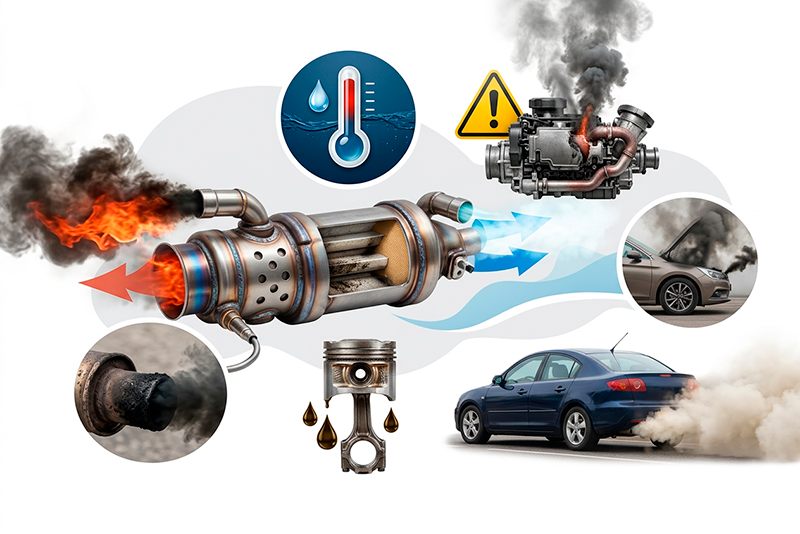
A slow coolant loss on a diesel engine is never something to write off as normal. When there is no obvious external leak, the EGR cooler deserves attention early. Common EGR cooler symptoms can look like a head gasket issue, injector problem, turbo failure, or a cooling-system leak, so a correct diagnosis matters before you start replacing expensive parts.
The EGR cooler lowers exhaust-gas temperature before exhaust is routed back into the intake. It does that by transferring heat from exhaust gas into engine coolant. That puts the cooler under constant thermal stress, especially on hard-working Cummins, Power Stroke, Duramax, International, Detroit, Volvo, and Paccar applications. Internal cracks, restricted passages, failed seals, and external leaks can all create drivability problems and put a truck out of service.
1. Unexplained coolant loss
Coolant that keeps disappearing without a visible hose, radiator, water pump, or reservoir leak is one of the most common EGR cooler symptoms. A failed cooler can leak coolant internally into the exhaust stream or intake tract. The leak may be small at first, which means the truck can run normally while the coolant level drops over several heat cycles.
Do not keep topping off the reservoir and sending the truck back to work. Low coolant can lead to overheating, cylinder head damage, cavitation-related concerns on certain engines, and repeat failures. Pressure-test the cooling system and inspect the EGR system before assuming the issue is a head gasket.
2. White exhaust smoke or steam from the tailpipe
A sweet-smelling white cloud from the exhaust, especially after warm-up, can indicate coolant entering the exhaust through a cracked EGR cooler. Unlike light condensation on a cold morning, coolant-related vapor is usually persistent and may become heavier under load.
The distinction matters. White smoke can also be caused by unburned fuel, injector issues, low compression, or timing-related problems. Coolant loss combined with white exhaust vapor points much more strongly toward an internal coolant leak. Inspect the tailpipe, monitor coolant level, and verify the condition with proper cooling-system and EGR-cooler testing.
3. Engine overheating under load
An EGR cooler can create overheating problems in two different ways. An internal restriction can limit coolant flow through the cooler, while a leak can gradually reduce the total coolant level in the system. Either condition reduces the engine’s margin when the truck is pulling a trailer, climbing grades, idling on a hot job site, or running long highway routes.
A truck that only gets hot under a heavy load should not automatically receive a radiator or thermostat. Those components need inspection, but so does the EGR cooler and the condition of the complete cooling system. Check for restricted coolant passages, contamination, poor flow, fan-clutch performance, and any sign of combustion gases or coolant where they do not belong.
4. Check engine light and EGR-related fault codes
A failing EGR cooler does not always set a direct “cooler failed” code. More often, the engine control module sees an EGR flow problem, an intake-air temperature issue, a boost-related condition, or an emissions performance fault. Depending on the engine platform, you may see codes connected to EGR flow, EGR temperature, differential pressure, intake temperature, or emissions efficiency.
Codes are a starting point, not a parts list. Carbon buildup in the EGR valve or piping, a faulty sensor, wiring damage, a sticking actuator, intake restriction, or exhaust restriction can trigger similar faults. Scan data is most useful when paired with a visual inspection and pressure testing. Compare commanded and actual EGR operation when the diagnostic equipment allows it.
5. Rough running, hesitation, or reduced power
An EGR system problem can affect the air charge reaching the cylinders. If the cooler is restricted, leaking, or contributing to excessive deposits in the intake path, the engine may hesitate, idle rough, feel lazy on acceleration, or enter a reduced-power strategy.
These symptoms overlap with turbocharger, injector, fuel-supply, and boost-leak issues. That is why technicians should avoid replacing an EGR cooler based on power loss alone. Verify boost pressure, inspect charge-air piping, check fuel delivery, and look for oil or coolant contamination in the intake before narrowing the diagnosis.
On fleet trucks, pay attention to driver reports that the unit is “using more pedal” to hold speed or is repeatedly derating on grades. That real-world information can identify a developing issue before it becomes a roadside breakdown.
6. Coolant residue or external leakage around the EGR assembly
Not every EGR cooler failure is internal. External leaks can develop at the cooler body, mounting surfaces, coolant fittings, crossover connections, gaskets, or hoses. Dried coolant residue may appear white, pink, green, orange, or another color depending on the coolant used. Look closely around the rear of the engine, under heat shields, and at areas where leaks can evaporate before reaching the ground.
A visual inspection is easier with a cold engine, good lighting, and the cooling system properly pressure-tested. Do not remove caps or open cooling-system components on a hot engine. Even a small external leak should be corrected promptly because it can introduce air, reduce coolant volume, and turn into an overheating event when the truck is working.
7. Coolant contamination or intake deposits
A damaged EGR cooler may leave evidence beyond the cooler itself. Coolant entering the exhaust side can create unusual deposits, while EGR-related soot and oil accumulation can build up in the intake system over time. In severe cases, technicians may find wetness, residue, or abnormal corrosion where coolant should never be present.
Oil in the coolant reservoir is not automatically an EGR cooler diagnosis. It may point to an oil cooler issue, head gasket concern, or another internal failure depending on the engine. Likewise, soot in the intake is normal to a degree on EGR-equipped diesels. The concern is excessive buildup combined with rough running, airflow faults, coolant loss, or visible leakage.
How to Confirm an EGR Cooler Problem
The right repair begins with isolating the failure. Start with a thorough visual inspection of coolant hoses, fittings, the cooler body, exhaust connections, and intake plumbing. Then pressure-test the cooling system according to the engine manufacturer’s procedure. A system that loses pressure without an external drip requires closer investigation.
If the engine design and service procedure allow it, isolate and test the EGR cooler independently. Inspect for coolant traces in the exhaust path and check the intake side for evidence of coolant intrusion. A combustion-gas test, bore inspection, and scan-tool data may be necessary when the symptoms overlap with head gasket or injector concerns.
Do not overlook the reason the cooler failed. Severe soot loading, a stuck EGR valve, cooling-system contamination, overheating, incorrect coolant, or neglected maintenance can shorten the life of the replacement part. Installing a new cooler without correcting the root cause can produce the same failure twice.
Replace the Cooler With the Rest of the System in Mind
EGR cooler replacement is more than bolting on a new part. The intake and exhaust mating surfaces need to be cleaned, damaged hoses and fittings need to be addressed, and the cooling system must be refilled with the correct coolant and properly purged of air. On many applications, it also makes sense to inspect the EGR valve, piping, sensors, clamps, and related gaskets while access is available.
Part quality matters on a component that sees constant heat cycles and pressure changes. American Diesel Parts supplies replacement diesel components for working trucks that need dependable fitment and repair-ready support. Confirm the engine serial number, vehicle application, and emissions configuration before ordering, because similar engines can use different cooler designs.
A failing EGR cooler can start as a minor coolant top-off and finish as lost power, overheating, or major engine damage. Catch the evidence early, test before replacing parts, and put the truck back on the road with components built for the work ahead.


