Injectors


 Turbos


 Fuel Pumps

 Actuator

 EGR Coolers
 Contamination Kits

 Accessories Kits
Diesel Fuel Pump Replacement Cost

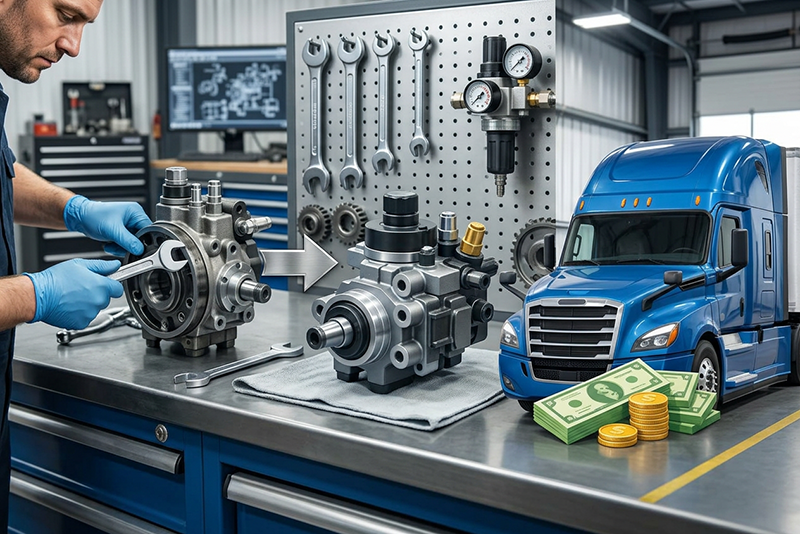
A diesel truck that cranks long, loses power under load, or starts throwing hard-start complaints is usually telling you something expensive is coming. Diesel fuel pump replacement cost can swing fast depending on whether you are dealing with a light-duty pickup, a medium-duty work truck, or a heavy-duty commercial engine with a high-pressure common rail system.
That price spread is exactly why owners, fleets, and repair shops need to look past the part number alone. The pump itself is only one piece of the bill. Labor time, contamination risk, related components, and whether you choose new, remanufactured, or rebuilt all affect the final repair total.
What affects diesel fuel pump replacement cost?
The biggest factor is pump type. A low-pressure lift pump is a very different job from replacing a high-pressure fuel injection pump on a modern diesel. Lift pumps are generally simpler, lower-cost parts with less labor. High-pressure pumps are more expensive, more precise, and often tied to stricter installation procedures because one failure can send metal through the fuel system.
Engine platform matters too. A pump for a 6.7L pickup application and a pump for a heavy-duty Cummins, Detroit, or Paccar engine do not live in the same pricing world. Commercial platforms often carry a higher parts cost, and labor can increase when access is tight or when additional calibration and fuel system cleaning are required.
Then there is parts quality. An economy replacement may look attractive on paper, but diesel fuel systems do not tolerate shortcuts well. A properly tested remanufactured or OEM-spec replacement often gives you a better balance of cost control and reliability, especially when uptime matters more than saving a few dollars on the front end.
Typical diesel fuel pump replacement cost ranges
For a basic lift pump replacement, many jobs land in the few-hundred-dollar range when the part is accessible and there is no major contamination issue. Once you step into high-pressure pump replacement, the bill can move into the four-figure range quickly. On some applications, especially where the failed pump has contaminated injectors, rails, lines, and the tank, the repair can climb dramatically.
A realistic way to think about it is in layers. The base repair may include only the pump and labor. A more complete repair may include seals, gaskets, fuel filters, new lines or cleaned lines, and system bleeding. The most expensive scenario includes a contamination kit or full fuel system repair because the failed pump shed metal and sent it downstream.
If you are quoting jobs for customers, this is where clear communication matters. Saying a pump replacement starts at one number is easy. Explaining that the final diesel fuel pump replacement cost depends on what is found inside the fuel system is what keeps the estimate honest.
Part cost vs labor cost
On many diesel repairs, labor gets the attention first, but with fuel pumps, the part itself often carries a large share of the bill. A high-pressure diesel pump is a precision component. Pricing reflects machining, tolerances, testing, and in many cases the quality of the remanufacturing process.
Labor still matters. Some pumps are straightforward to access and swap. Others require significant teardown, fuel line removal, priming procedures, timing-related care, or electronic setup checks. Shop rate also changes the equation. A fleet maintenance shop in one market and a dealer-level shop in another can produce very different totals for the same engine.
This is also why the cheapest part rarely gives the cheapest repair. If a low-grade pump fails early, causes contamination, or creates repeat labor, the first invoice was not the real cost. The real cost includes downtime, towing, rescheduling loads, and a second repair cycle.
Why contamination changes everything
When a diesel fuel pump fails internally, especially a high-pressure pump, metal debris can move through the system fast. Once that happens, replacing only the pump can be a costly mistake. Injectors, rails, lines, pressure control components, and even the tank may need to be cleaned or replaced depending on the platform and severity.
This is where repair costs jump from manageable to painful. A contamination-related repair is not just about restoring fuel pressure. It is about protecting every new component from the debris left behind by the old failure. Skip that step, and you risk taking out the replacement pump and injectors almost immediately.
For shops and fleets, this is not the place to cut corners. If contamination is present, the best solution for your diesel truck is a complete repair plan, not a partial one.
New, remanufactured, or rebuilt pump?
This choice has a direct effect on diesel fuel pump replacement cost. New pumps usually come in at the highest upfront price. For some applications, they are the right fit, especially when OEM sourcing and exact platform requirements are non-negotiable.
Remanufactured pumps often make strong financial sense when they come from a supplier that tests them correctly and follows platform-specific rebuild standards. A quality reman unit can lower acquisition cost without sacrificing reliability, which matters to owners balancing repair budgets against uptime.
Rebuilt can mean very different things depending on who did the work. A properly rebuilt pump from a diesel-focused supplier is one thing. A lightly cleaned unit with minimal component replacement is another. The issue is not the label by itself. The issue is whether the pump was inspected, machined where needed, assembled to spec, and tested under conditions that reflect real operation.
For many diesel owners and repair shops, the smart buy is not automatically the cheapest or the most expensive option. It is the unit that gives proven reliability, warranty support, and the right technical backing for the engine you are servicing.
Hidden costs that get missed on the first estimate
The pump is the headline item, but several smaller costs often show up after the job starts. Fuel filters should almost always be part of the repair. Depending on the engine, you may also need installation hardware, seals, line service, fuel tank cleaning, or injector inspection.
Core charges can affect the invoice too. With remanufactured diesel components, the old pump often has value if the core is rebuildable. Returning that core correctly can reduce net cost. If the core is damaged beyond rebuild standards, the numbers can change.
Downtime is another real cost. For an owner-operator, one missed load matters. For a fleet, one truck down can ripple into scheduling problems, overtime, or rental equipment costs. That is why availability and technical support matter almost as much as the part price.
How to keep diesel fuel pump replacement cost under control
Start by diagnosing the failure correctly. Hard starting, low power, poor fuel pressure, injector codes, and no-start conditions do not always point to the pump alone. Replacing a pump before confirming supply pressure, electrical control issues, restrictions, and contamination can waste serious money.
Next, match the repair scope to the failure. If the old pump failed clean and the rest of the system checks out, a targeted replacement may be enough. If there is metal in the system, treat it like a full-system event. That decision is where good technicians save customers from repeat failures.
Finally, source from a supplier that knows diesel platforms, not just general auto parts. A tested replacement with the right fitment details, warranty coverage, and core-return support can shorten downtime and reduce comebacks. American Diesel Parts is built around exactly that approach for diesel owners, shops, and fleets that need dependable components without guesswork.
When replacing the pump makes more sense than repairing around it
There are times when owners try to stretch a failing pump by replacing filters, checking sensors, or addressing starting aids first. That is reasonable during diagnosis. But once a pump shows internal wear, unstable pressure performance, or contamination, delaying replacement usually adds cost instead of saving it.
A weak pump can stress injectors, hurt performance, and create inconsistent operation that is harder to diagnose later. On commercial trucks, that usually means more downtime at the worst possible moment. When the pump is proven bad, replacing it with a quality unit is often the cheaper move compared to chasing secondary issues.
The right number is not just the cheapest quote on paper. The right diesel fuel pump replacement cost is the one tied to the correct repair, the correct parts, and the lowest chance of doing the job twice. If your truck earns its keep every day, buy the repair that gets it back to work and keeps it there.